


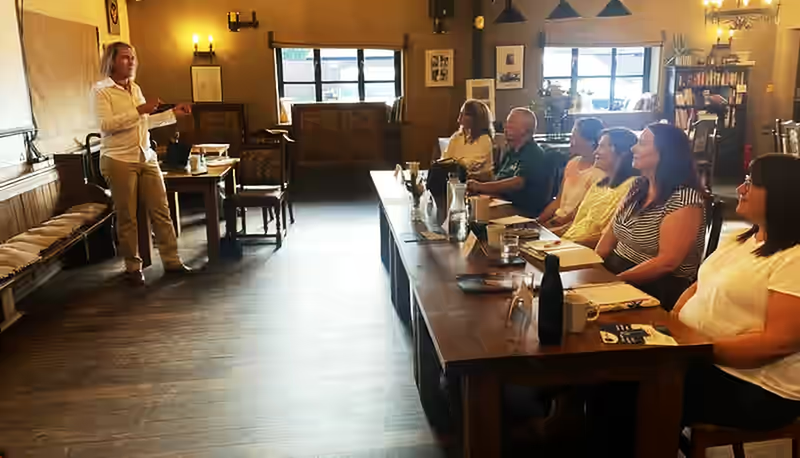
Last week, I spent a couple of hours with a group of Hertfordshire business owners talking about search engine optimisation (SEO). They run good businesses and know the value they offer. The challenge was making sure people looking for that help could find them online.
That is why I enjoy delivering workshops like this. Once you understand what search engines are trying to do, SEO becomes much less mysterious. You can start to see where your website is helping potential customers and where it is leaving them with unanswered questions.
Start with the question your customer is asking
One of the biggest shifts in the room was moving from “What do we want to say about our business?” to “What does somebody need to know before they choose us?”
Of course, people want to know who they are dealing with. But they usually arrive with a problem first. Can you provide the service they need? Do you work with businesses or people like them? Where do you operate? What happens next? Can they trust you to do a good job?
Your website should make those answers easy to find. A page that clearly explains what you do, who it helps and how it solves a problem is useful to visitors. It also gives search engines a clearer picture of what the page is about.
Give important services room to breathe
We talked about a familiar situation: a business offers several services, but its website squeezes them all onto one page. A visitor looking for one particular service has to hunt through everything else to find it.
If a service is important to your business and customers look for it in its own right, a dedicated page can be a better answer. It gives you space to explain who the service is for, what it involves, the questions people commonly ask and how to get started. It also means someone can arrive directly on the page that matches what they searched for.
That does not mean creating a thin page for every slight variation of a service or every nearby town. Each page should have something genuinely useful and distinct to say.
SEO is more than the words on a page
During the workshop, we looked at three connected areas:
- On-page SEO: clear page titles and headings, useful content, and links that help people move around the site.
- Technical SEO: making sure search engines can access your pages and that the site works well for visitors, including on a phone.
- Off-page SEO: the signals beyond your website that help people discover and trust your business, such as relevant mentions and reviews.
For local businesses, the picture also includes how clearly you describe the areas you serve and how well your business information represents what you actually offer. No single change guarantees a place at the top of the results. The aim is to make it easier for the right people to find a useful, trustworthy answer.
Your website is never finished
Perhaps the most reassuring point for the group was that a website is not a book. You do not have to perfect every page before you can improve any of them.
Choose one service that matters to your business. Look at the page through a potential customer’s eyes. Does it answer the questions they are likely to have? Is the next step clear? Improve that page, then move to the next priority.
I love seeing the moment someone connects the advice to their own business and spots a change they can make. That is what makes an interactive workshop so valuable: we can move beyond general rules and talk about the real questions their customers ask.
If you would like to talk through how people find your business in search, or hear about a future workshop, get in touch. We would be happy to have a conversation.